
- 0
- 1,707 word
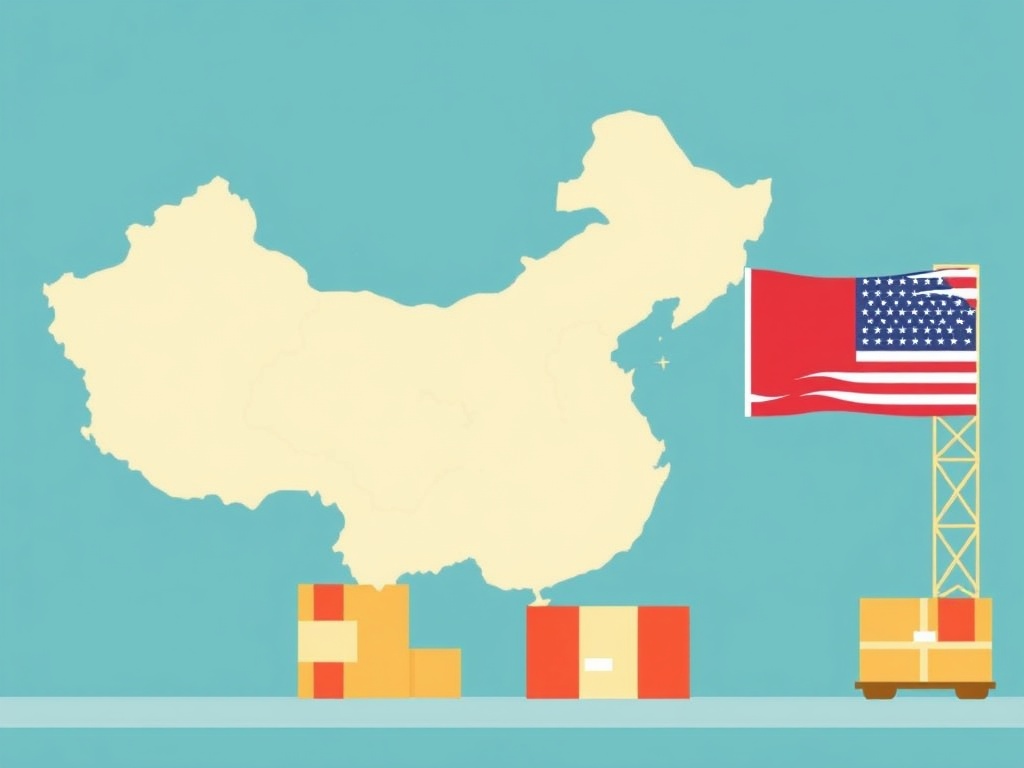
China Tariffs: The landscape of international trade has shifted significantly in 2026. For businesses and economists alike, understanding the latest changes in China’s tariff policies—and the corresponding legal shifts in the United States—is crucial for navigating the year ahead.
From Beijing’s precision-targeted tax reductions to Washington’s judicial overturning of emergency measures, here is your complete guide to the current state of China tariffs and what they mean for the global economy.
01 The Big Picture: A Tale of Two Trade Policies
The year 2026 is shaping up to be a pivotal moment in global trade, marked by two major developments:
-
China’s Strategic Reduction: On January 1, 2026, China implemented its latest annual tariff adjustment, lowering import duties on 935 products to boost domestic manufacturing, support green energy, and improve public health.
-
The U.S. Judicial Shift: In a stunning legal reversal, the U.S. Supreme Court struck down the emergency tariffs imposed by the previous administration under the International Emergency Economic Powers Act (IEEPA). This ruling has effectively reduced the average tariff rate on Chinese goods entering the U.S. from 32% to 24% , injecting new uncertainty—and opportunity—into the market.
These opposing forces are creating a complex environment where supply chain managers and investors must remain agile.
02 Inside China’s 2026 Tariff Overhaul
China’s latest adjustments, detailed by the Customs Tariff Commission of the State Council, are less about broad protectionism and more about micro-economic precision. The 2026 plan features 8,972 tariff lines, with temporary import duty rates applied to 935 specific items that are lower than their standard Most-Favored-Nation (MFN) rates.
The Three Pillars of the 2026 Reform
-
High-Tech Manufacturing: To accelerate the “intelligent transformation” of its industrial base, China has slashed tariffs on critical components. This includes parts for CNC hydraulic presses and advanced electronic connectors, lowering costs for domestic manufacturers of machinery and electronics.
-
The Green Transition: Supporting its carbon neutrality goals, China reduced duties on key resources for the green economy. Notably, tariffs on recycled black mass (used in lithium-ion battery production) and unroasted iron pyrites have been cut to facilitate the domestic clean energy supply chain.
-
Healthcare & Livelihood: In a move aimed at improving quality of life, tariffs have been reduced on medical necessities such as synthetic vascular grafts (artificial blood vessels) and diagnostic reagents for infectious diseases, making advanced healthcare more accessible.
“By unilaterally lowering tariffs while some nations trend toward protectionism, China is sending a clear signal of its commitment to globalization,” said Tu Xinquan, Dean of the China Institute for WTO Studies at the University of International Business and Economics. “This is designed to integrate China more deeply into global supply chains, not isolate it.”
03 The American Twist: What the IEEPA Ruling Means
Just as China recalibrates its import strategy, the United States is undergoing a forced recalibration of its own. The Supreme Court’s decision to strike down the justification for Trump-era “emergency” tariffs has immediate consequences.
For years, these tariffs acted as a blanket tax on hundreds of billions of dollars worth of Chinese imports. The new ruling strips away a significant layer of that cost, effectively lowering the average tariff burden from 32% down to 24%.
This creates a new dynamic for U.S. importers:
-
Cost Relief: Companies that have been paying the higher rates for years may see immediate margin improvements.
-
Strategic Sourcing: The tariff reduction makes Chinese goods relatively cheaper compared to alternatives in Vietnam or Mexico, potentially reversing some “de-risking” supply chain trends.
-
Policy Uncertainty: The ruling does not eliminate tariffs entirely; it removes those levied under a specific emergency authority. Other tariff lists remain in place, meaning the trade war is far from over, but the battlefield has changed.
04 Winners and Losers in the New Tariff Regime
The convergence of China’s lowered import barriers and the partial U.S. tariff rollback creates distinct winners and losers across the global economy.
The Winners
-
Chinese Green Tech Companies: Lower import costs for raw materials like lithium battery components give Chinese EV and battery manufacturers a competitive edge.
-
U.S. Retailers & Consumers: The reduction in U.S. import taxes could eventually lead to lower shelf prices for consumer electronics, apparel, and household goods.
-
High-End German and Japanese Manufacturers: China’s reduced tariffs on precision machinery parts make it cheaper for German and Japanese industrial giants to export their high-tech components to the Chinese market.
The Losers
-
“Tariff-Proof” Havens (Vietnam, Mexico): As the cost of trading directly with China decreases, the incentive to shift supply chains through third countries to avoid tariffs diminishes.
-
U.S. Manufacturers Competing with Imports: Domestic producers who benefited from the tariff shield now face renewed competition from cheaper Chinese imports.
05 Looking Ahead: Strategy for 2026 and Beyond
For businesses operating in this environment, the key takeaway is that the era of static trade policy is over. Agility is the new currency.
-
Review Your Product Classifications: With China updating 8,972 tariff lines, your product may now qualify for a lower temporary import duty. A customs audit is essential.
-
Model the U.S. Impact: The drop from 32% to 24% is significant. U.S. importers should re-forecast their landed costs and revisit their pricing strategies immediately.
-
Monitor the “Reciprocity” Trend: While China lowers barriers, it is also more strictly enforcing intellectual property rights and standards. The game is shifting from simple cost to compliance and quality.
Conclusion:
The tariff war of the late 2010s and early 2020s is evolving. In 2026, we are seeing a decoupling of pure protectionism in favor of targeted, strategic economic policy. China is lowering its drawbridge for the goods it needs to build the future, while the U.S. legal system pulls back a layer of trade barriers.
Navigating this new normal requires a sharp eye on both Washington and Beijing—because the only constant in global trade today is change.
Author

admin@thefinancely.com
Related Posts

What “Transds” Truly Means (Beyond Just Teamwork)
- 0
- 1,451 word
It’s easy to confuse Transdisciplinarity with its close cousins. Understanding the difference is key: Multidisciplinary: People from different fields work in parallel, each staying firmly within...
Read out all
Epcylon Explained: The Ultimate Guide to Applications & Benefits in 2026
- 0
- 863 words
In the rapidly evolving landscape of digital transformation, new frameworks and platforms emerge almost daily. However, few generate the quiet yet potent...
Logistics 2026: The Backbone of Global Commerce
- 0
- 810 words
Every product you’ve ever bought—from your morning coffee to your new smartphone—arrived through a hidden web of coordination, timing, and technology. That...
Read out all
SFM Compile: Model Conversion, Rendering & Map Compilation
- 0
- 1,555 word
Source Filmmaker (SFM) is one of the most powerful animation tools available—and it’s completely free. Whether you’re creating cinematic shorts, memes, or...
Read out all
Who is RV Patrick? The Multiple Faces Behind the Name
- 0
- 1,261 word
When you search for “RV Patrick,” you’re not looking for a single person or company. Instead, you’ll discover three distinct stories, each...
Read out all
http://www.arlindmorina.info – Digital Craftsmanship Redefined
- 0
- 930 words
In a digital world saturated with cookie-cutter templates and generic WordPress themes, finding a creative force who blends technical precision with artistic...
Read out all