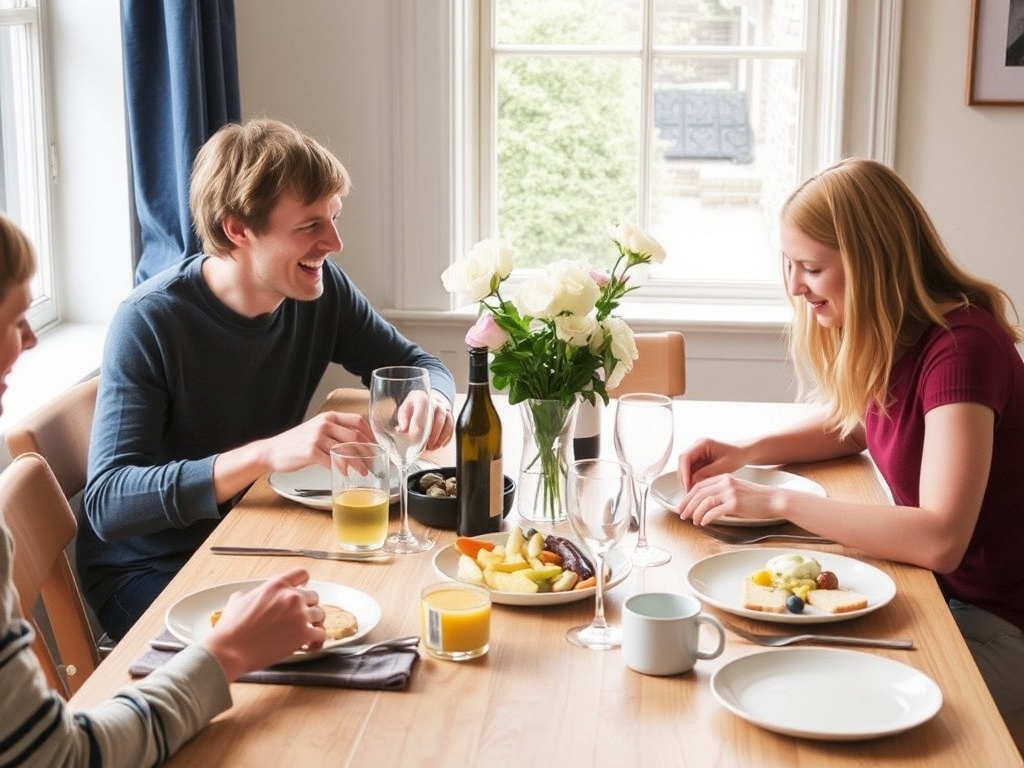
Bjudlunch

Imagine this: the aroma of freshly brewed coffee mingling with laughter in a cozy café, or the clinking of cutlery in a bustling lunch restaurant where colleagues pause their workday to connect. This is the essence of bjudlunch, a cherished Swedish social tradition that goes far beyond simply sharing a meal .

In a world that often feels rushed and digital, the Swedish concept of “bjudlunch” (pronounced byood-lunch) offers a refreshing reminder of the power of small, genuine gestures. It’s a beautiful practice built on hospitality, gratitude, and the simple act of treating someone to lunch. Whether you’re looking to strengthen a friendship, impress a business partner, or simply understand a key part of Swedish culture, this guide will walk you through everything you need to know about the art of the bjudlunch.

What Exactly is Bjudlunch?

At its core, bjudlunch is a Swedish term that literally translates to “invite lunch” . It refers to a lunch where one person—the host—invites another person or a group and pays for the meal as a gesture of kindness . The word comes from the Swedish verb bjuda, which means “to invite” or “to treat” .

However, a bjudlunch is much more than just a free meal. It is a meaningful social ritual rooted in deeper Scandinavian values such as modesty, equality, and genuine human connection . It’s a moment of appreciation, a space for relaxed conversation, and a powerful tool for building stronger relationships .

The Heart of Swedish Culture: Why Bjudlunch Matters

The tradition of bjudlunch is a window into the Swedish soul. It reflects a culture that values fairness, thoughtfulness, and shared experiences over extravagance .

  • A Gesture of Appreciation: Swedes often use a bjudlunch to say a sincere “thank you.” It could be to acknowledge help with a project, support during a tough time, or simply to show gratitude for someone’s presence in their life .

  • Strengthening Social Bonds: Despite the common perception of Swedes as reserved, they deeply value authentic interactions. A bjudlunch creates the perfect, low-pressure environment to catch up, share stories, and deepen friendships .

  • Reflecting the Value of Lagom: This tradition perfectly embodies the Swedish concept of lagom, which means “not too little, not too much, just the right amount.” A bjudlunch is typically a modest affair—a mid-priced restaurant or a simple homemade meal—where the focus is on connection, not on showing off wealth .

A Bite of History: Where Did Bjudlunch Come From?

The roots of bjudlunch can be traced back to Sweden in the 19th century . It emerged from communal farming practices, where gathering for a shared meal was a way to connect with family and friends after long days of labor . These early gatherings were simple, focusing on hospitality and togetherness.

Over time, what began as a casual get-together evolved into a treasured tradition for special occasions and, eventually, a normalized part of social and professional life . Today, it stands as a testament to the enduring Swedish values of community and camaraderie .

The Unwritten Rules: Bjudlunch Etiquette

While the gesture is casual and friendly, there are a few important unwritten rules to follow to ensure a successful bjudlunch .

For the Host (The Inviter):

  • You Invite, You Pay: This is the golden rule. If you say “I’d like to treat you to lunch,” it’s expected that you will cover the entire bill. Any argument from the guest is politely declined .

  • Choose the Right Spot: Opt for a comfortable, mid-priced restaurant or café where conversation can flow easily. The goal is a relaxed atmosphere, not a lavish, formal one .

  • Keep it Clear: Make the invitation straightforward and warm: “I’d love to treat you to lunch next week.” This removes any ambiguity about who is paying .

  • Be a Thoughtful Host: Consider your guest’s dietary preferences and schedule. Let them order freely (within reason) and focus on being present and engaged in the conversation .

For the Guest (The Invitee):

  • Express Gratitude: A simple and heartfelt “Tack så mycket!” (Thank you very much!) is essential and always appreciated .

  • Be Punctual and Engaged: Arrive on time and be an active, interested participant in the conversation. This shows respect for the host’s gesture .

  • Reciprocate (Someday): While not required immediately, it’s a kind and balanced practice to return the gesture in the future, perhaps by inviting your host to a bjudlunch another time .

Bjudlunch in Different Settings

The beauty of bjudlunch is its versatility. It fits seamlessly into various aspects of life.

In Personal Relationships

This is the most common and heartfelt form of bjudlunch. It’s about reconnecting with an old friend, celebrating a piece of good news, or simply spending quality time with a family member. It transforms a simple meal into a cherished memory .

In Professional and Business Environments

In Swedish work culture, the bjudlunch is a powerful and respected tool .

  • Networking and Building Trust: Discussing projects over a shared meal in a neutral, relaxed setting helps break down hierarchical barriers and fosters open communication .

  • Team Building: Managers often host bjudlunches to celebrate milestones, welcome new team members, or simply boost team morale. It shows employees they are valued .

  • Welcoming New Colleagues: Inviting a new hire to lunch is a classic way to make them feel included and part of the team from day one .

What’s on the Table? Traditional Bjudlunch Foods

While the location can vary from a workplace cafeteria to a local bistro, a more traditional or home-hosted bjudlunch often features classic Swedish dishes .

  • Open-Faced Sandwiches (Smörgåsar): A staple, often topped with shrimp, egg, or herring .

  • Swedish Meatballs (Köttbullar): Served with creamy mashed potatoes and the unmistakable tang of lingonberry sauce, these are a comforting classic .

  • Pickled Herring (Inlagd Sill): A must-have at any traditional gathering, often served with potatoes and sour cream .

  • Crispbread (Knäckebröd): A crunchy, versatile bread enjoyed with butter and cheese .

  • Salads and Cheeses: A selection of fresh salads and local cheeses, like Västerbotten, adds variety to the spread .

  • Dessert: A sweet ending might include Kanelbullar (cinnamon buns) or a slice of Prinsesstårta (princess cake) .

Bjudlunch in the Modern World

As society changes, so does the bjudlunch, proving its lasting relevance .

  • The Virtual Bjudlunch: With the rise of remote work, teams now host virtual lunches over video calls. Companies often support this by sending gift cards or meal delivery credits to employees, allowing them to eat together while apart .

  • Employer-Sponsored Programs: Many companies have formalized the tradition, funding regular team lunches to encourage unity and maintain a strong company culture, even in hybrid settings .

  • A Tool for Integration: For newcomers to Sweden, being invited to a bjudlunch can be a warm and welcoming introduction to local customs and a first step toward building a new social network .

Your Quick Guide to Hosting a Memorable Bjudlunch

Ready to embrace this wonderful tradition? Here’s a simple checklist:

  1. Set a Date: Choose a time that works for both of you .

  2. Choose a Venue: Pick a comfortable, quiet spot. A local café, a casual bistro, or even your own home are all great options .

  3. Plan the Guest List: For a more intimate and meaningful conversation, small groups of 2-6 people are ideal .

  4. Extend the Invitation: Be clear and warm: “I’d like to treat you to lunch.” .

  5. Focus on Connection: Put away your phone and be present. The goal is genuine conversation and strengthening your bond .

Conclusion

The Swedish bjudlunch is a powerful reminder that the simplest gestures often have the greatest impact. It’s a tradition that beautifully blends practicality with humanity, fostering trust, appreciation, and connection one shared meal at a time .

In our fast-paced, digital world, taking a moment to slow down and share a meal with someone is more important than ever. So, whether you’re in Stockholm or anywhere else in the world, consider adopting this beautiful custom. Invite a colleague, a friend, or a family member to lunch. It’s a small act of generosity that can nourish relationships and create lasting memories. After all, some of the best conversations in life happen over a shared meal.

Frequently Asked Questions About Bjudlunch

After learning about the tradition of bjudlunch, you might have some practical questions about how it works in real life. Here are detailed answers to the most common queries.

1. Is a bjudlunch only for friends, or is it common in the workplace too?

It is extremely common in both settings. In fact, the workplace is one of the most frequent arenas for a bjudlunch.

  • In Professional Life: It’s a standard practice for managers to invite their team members to lunch, either to celebrate a success, welcome a new employee, or simply as a gesture of goodwill. It’s also a key tool for networking and building trust with clients or partners. The relaxed environment helps break down formal barriers and fosters more open communication.

  • In Personal Life: Among friends and family, it’s a way to celebrate milestones, offer support, or simply maintain a strong connection. The core principle of “I invite, I pay” remains the same, but the context shifts from professional networking to personal bonding.

2. What’s the difference between a “bjudlunch” and just a regular “lunch”?

The fundamental difference lies in the intention and the social contract. A regular lunch is typically a neutral, mutual event. You might say, “Let’s grab lunch sometime,” and you both expect to pay for your own meals (often called “going Dutch”).

bjudlunch, however, is an intentional gesture. The phrase “Jag bjuder på lunch” (“I’m treating you to lunch”) signals a shift. It’s an act of hospitality where the inviter is the host, and the invitee is the guest. The focus moves from just eating to actively building the relationship through a gift of gratitude or appreciation.

3. I’m a guest at a bjudlunch. The food was amazing. Should I offer to pay for the tip (dricks)?

This is a thoughtful question, and the etiquette is clear. As a guest, you should not pay for anything, including the tip.

The person who extended the invitation is the host, and part of being a good host in this tradition is covering the entire bill. If you try to pay for the tip, it can create an awkward moment where the host has to insist on paying. The best way to handle it is to simply say a warm and sincere “Tack så mycket för lunchen!” (“Thank you so much for lunch!”) at the end. Your genuine gratitude is the best tip you can give.

4. I’m an international student/newcomer. A Swedish colleague invited me to a bjudlunch. How do I respond?

First of all, congratulations! You’ve just been offered a wonderful entry point into Swedish social life. Here’s how to handle it:

  1. Accept with Enthusiasm: A simple “Yes, thank you, I’d love to!” is perfect.

  2. Be Punctual: Arrive exactly on time. Punctuality is highly valued in Sweden.

  3. Engage in Conversation: Be curious. Ask questions about their work, their interests, or Sweden in general. This is a chance to build a genuine connection.

  4. Express Gratitude: At the end, look them in the eye and say, “Tack så mycket for lunch, I really enjoyed it and appreciate you inviting me. “

  5. Reciprocate (Eventually): There’s no pressure to do this immediately, but in the future, you could consider inviting them for a fika (a coffee and cake break) or even your own bjudlunch. This shows you understand and appreciate the reciprocal nature of the gesture.

5. How is bjudlunch different from the more famous Swedish tradition, fika?

This is an excellent question, as both are central to Swedish social culture, but they serve different purposes.

Feature Fika Bjudlunch
Core Activity A coffee and cake break. A full meal.
Timing Typically mid-morning or mid-afternoon. Midday.
Duration Short, often 15-30 minutes. A quick pause. Longer, often an hour or more.
Primary Focus Taking a break, socializing briefly, and re-energizing. It’s often a collective pause. Building a deeper relationship, showing gratitude, and having a substantial conversation.
Payment Often rotational (“I’ll get this one, you get the next”) or everyone pays for their own. Strictly a gift from the inviter to the invitee.

In short, fika is a brief, egalitarian pause, while a bjudlunch is a deliberate, hosted gift of a meal to strengthen a bond.

6. Does the person inviting always have to pay for the most expensive item on the menu?

No, the tradition is rooted in the Swedish value of lagom (just the right amount). While the host pays for the entire meal, the guest is also expected to be considerate.

A guest shouldn’t use the opportunity to order the most expensive dish on the menu, a bottle of wine, and multiple courses unless the host explicitly encourages it (e.g., “Please, order whatever you’d like!”). The unspoken agreement is that the guest will choose a reasonably priced meal, keeping the gesture comfortable and modest for the host. The focus is on the connection, not the cost of the food.

7. I want to host a bjudlunch at home. What should I cook?

Hosting at home adds an extra layer of warmth and hospitality. You don’t need to prepare a complicated meal. In fact, simplicity is key. Focus on classic, comforting Swedish dishes that can be made ahead of time so you can spend time with your guest.

Great options include:

  • A classic Pytt i Panna: A hearty hash of diced potatoes, onions, and meat, topped with a fried egg and pickled beetroot.

  • Homemade Meatballs (Köttbullar): Served with creamy mashed potatoes, lingonberry jam, and pickled cucumber.

  • A Gravlax plate: Cured salmon with a mustard-dill sauce, served on crispbread or with boiled new potatoes.

  • A hearty soup: Like a traditional yellow pea soup (ärtsoppa), often served with pancakes for dessert—a classic Swedish combination.

  • A Smörgåsbord (light version): Set out a spread of crispbread, cheeses, cold cuts, herring, and hard-boiled eggs, allowing guests to build their own plates.

The most important ingredient is creating a relaxed and welcoming atmosphere.

Leave a Reply

Your email address will not be published. Required fields are marked *

Author

admin@thefinancely.com

Related Posts

Your Ultimate Guide to NYT Strands Answers & Winning Strategies

Is the New York Times Strands puzzle giving you a run for your money? You’re not alone. Since its debut, this daily...

Read out all
Novapg

Novapg: A Comprehensive Guide to Its Multiple Meanings and Applications

In today’s digital landscape, the term novapg has emerged across various platforms and industries, creating some confusion about its true meaning and application....

Read out all
dubolsinho

Dubolsinho: The Brazilian Publisher and Viral Cultural Trend Explained

In the ever-evolving landscape of culture and the internet, few terms are as fascinating and multifaceted as dubolsinho. Depending on where you encounter...

Read out all
IngeBIM

IngeBIM: Chilean Firm, French Innovator, or Something Else?

In the digital age, a single name can often represent multiple entities across different industries and continents. This is certainly the case...

Read out all